


 Send Inquiry
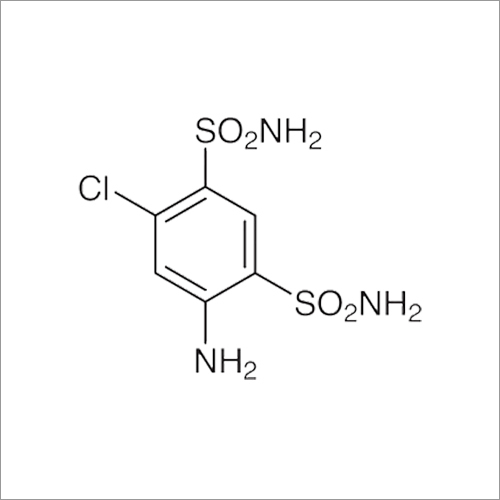
4-Amino-6-Chlorobenzene-1 3-Disulphonamide (DASA)
1250 INR/Kilograms
Product Details:
- Storage Store in tightly sealed containers; keep in cool, dry place
- EINECS No 204-469-4
- Particle Size Passes through 40 mesh
- Loss on Drying 0.5%
- Color White to off-white
- Melting Point >300C (decomposes)
- Shelf Life 36 months
- Click to View more
X
4-Amino-6-Chlorobenzene-1 3-Disulphonamide (DASA) Price And Quantity
- 1250 INR/Kilograms
- 1000 Kilograms
4-Amino-6-Chlorobenzene-1 3-Disulphonamide (DASA) Product Specifications
- 29214390
- 317.73 g/mol
- Solid
- Odorless
- C6H8ClN3O4S2
- Slightly soluble in water; insoluble in organic solvents
- Organic Compound
- 0.002%
- Non-poisonous under normal handling
- C6H8ClN3O4S2
- Neutral (pH 6.5 - 7.5 in suspension)
- Tasteless
- Not applicable (decomposes)
- 204-469-4
- White to off-white crystalline powder
- Store in tightly sealed containers; keep in cool, dry place
- 121-30-2
- Passes through 40 mesh
- Pharmaceutical Grade
- Hydrochlorothiazide
- 0.5%
- White to off-white
- 99%
- DASA
- 36 months
- >300C (decomposes)
- 4-Amino-6-chlorobenzene-1,3-disulphonamide (DASA)
4-Amino-6-Chlorobenzene-1 3-Disulphonamide (DASA) Trade Information
- 15000 Kilograms Per Month
- 7 Days
- Australia, North America, South America, Eastern Europe, Western Europe, Middle East, Central America, Asia, Africa
- All India
Product Description
4-Amino-6-Chlorobenzene-1,3-Disulphonamide (DASA) has the Molecular Formula of C6H6ClNO6S2. Its Molecular Weight is 287.70 g/mol. It is available in pure form with no adulteration to provide the best results. We provide this chemical after testing for quality, composition and effectiveness. It is widely used in the manufacturing of different chemicals.
Versatile Pharmaceutical Intermediate
DASA serves as a pivotal intermediate in the production of hydrochlorothiazide and other medicinal compounds. With a reliable purity of 99%, it ensures consistent performance in critical pharmaceutical formulations. The compound's stability and compliance with international pharmacopoeial standards make it a preferred choice for global manufacturers.
Rigorous Quality Assurance
Every batch of DASA undergoes stringent quality checks, including HPLC and TLC purity testing. This ensures that the product not only meets but often exceeds regulatory expectations. Microbial and heavy metals content are well within permissible limits, supporting its safe use in pharmaceutical applications.
Safe Handling and Storage
DASA is non-toxic and non-poisonous at recommended usage levels, presenting minimal risk during routine handling. Proper storage in tightly sealed containers within cool, dry environments helps maintain product stability and prolongs shelf life up to 36 months.
FAQ's of 4-Amino-6-Chlorobenzene-1 3-Disulphonamide (DASA):
Q: How should 4-Amino-6-Chlorobenzene-1,3-Disulphonamide (DASA) be stored to ensure its longevity?
A: DASA should be stored in tightly sealed containers within a cool, dry location away from direct moisture. Proper storage preserves its stability and maintains the product's shelf life of up to 36 months.Q: What is the primary usage of DASA in the pharmaceutical industry?
A: DASA acts as a pharmaceutical intermediate, most notably in the synthesis of hydrochlorothiazide, a widely used diuretic. It supports the formulation of other medicinal products as well.Q: When is DASA considered non-hazardous for transport?
A: DASA is classified as a non-hazardous material under the US DOT regulations, meaning standard safety protocols are sufficient during transportation.Q: Where is DASA typically manufactured and supplied from?
A: DASA is manufactured and supplied from India, available from trusted manufacturers and suppliers specializing in pharmaceutical-grade chemicals.Q: What processes are used to verify the quality and purity of DASA?
A: Each batch of DASA undergoes high-performance liquid chromatography (HPLC) and thin-layer chromatography (TLC) tests to confirm purity, in addition to checks for microbial limits and heavy metals in line with IP/USP standards.Q: How does DASA benefit pharmaceutical manufacturers?
A: With its high purity, regulatory compliance, and reliable performance in formulations, DASA offers consistent results, helping manufacturers maintain quality standards in medicinal products.Q: Is DASA safe to handle and use in pharmaceutical applications?
A: Yes, DASA is considered non-toxic and non-poisonous at recommended usage levels, making it safe for handling and use in pharmaceutical manufacturing, provided proper protocols are observed.Tell us about your requirement

Price:
Quantity
Select Unit
- 50
- 100
- 200
- 250
- 500
- 1000+
Additional detail
Mobile number
Email

Other Products in 'Pharmaceuticals API Bulk Drug Intermediates' category
![Ethyl-4-methyl-2-[4-(2-methylpropoxy)- 3-cyanophenyl]-4-methyl-5- thiazolecarboxylate](https://cpimg.tistatic.com/09879276/b/4/Ethyl-4-methyl-2-4-2-methylpropoxy-3-cyanophenyl-4-methyl-5-thiazolecarboxylate.jpg?tr=w300)




|
 Address
- Plot No. - 281, GIDC, Ankleshwar - 393002, Gujarat, India
- Phone : 07313726826
GST : 24ABXFS7553E1ZN

 Send Inquiry
 Send SMS
Shreeneel Chemicals
All Rights Reserved.(Terms of Use)
Developed and Managed by Infocom Network Private Limited.
Developed and Managed by Infocom Network Private Limited.

